
Wave curtains have a wonderfully calm, contemporary look. Instead of bunching into gathers or holding a fixed pleat, the fabric falls in soft, even curves from one end of the track to the other. The result is simple and effortless. Getting there depends on a few careful decisions before the curtains are made.
If you’re wondering how to measure for wave curtains, the most important thing to know is that you aren’t measuring for the fabric alone. The curtain, track and wave system all work together. Your track width affects the curtain width. The mounting position affects the drop. The selected wave system determines how much fabric is needed to form those beautifully consistent folds.
This guide takes you through the process one step at a time, so you can plan your window décor with confidence.

What you’ll need before measuring
Gather a few basics before you begin:
- A sturdy tape measure
- A pencil and paper or the notes app on your phone
- A step ladder, if the track will be fitted above easy reach
- An idea of where the curtain track will sit
- A decision about whether the curtains should cover only the window or extend beyond it
Step 1: Measure the track width
When you measure for wave curtains, start with the track rather than the glass. The track width is what the wave system uses to determine the finished curtain width and fabric quantity.
If you already have a track
Measure the full usable length of the track, from one end to the other. Don’t include decorative end caps or any part of the hardware that the curtain runners can’t travel across.
Before assuming the existing track will work, check that it is designed for wave curtains. Wave folds rely on evenly spaced runners and a compatible heading system. A standard curtain track won’t necessarily produce the same result.
If you’re fitting a new track
Measure the window first, then decide how far the track should extend beyond the frame on each side. This extra width can:
- Reduce light slipping in around the curtain edges
- Improve privacy
- Allow the open curtains to stack partly or fully away from the glass
- Make the window appear wider and more generous
Your final track dimensions should always be checked against the specifications of the wave curtain system you’ve chosen.
Step 2: Measure the curtain drop
The curtain drop is measured from the correct point on the track or proposed track position to the place where you want the fabric to finish. A ceiling-mounted track and a wall-mounted track won’t produce the same drop, even when they’re used at the same window.
Common finished lengths include:
Sill length
The curtain ends at or just above the windowsill. This can be important where furniture is below the window or where full-length curtains aren’t suitable.
Below-sill length
The fabric finishes below the sill without reaching the floor. Allow enough space for the curtain to clear the sill neatly rather than ending awkwardly against it.
Floor length
The curtain falls to the floor for a clean, full-length look. This is a popular choice for wave curtains because it emphasises their long, continuous folds.
Slightly above the floor
Finishing the curtain a small distance above the floor helps it move freely and keeps the hem from brushing over the surface. This can be helpful in busy rooms.
Ceiling to floor
A ceiling-mounted track paired with floor-length curtains can make a room feel taller and give the window décor a beautifully finished appearance.
Measure at the left, centre and right of the window. Floors and ceilings aren’t always perfectly level, especially in older homes. Record all three figures and ask your curtain supplier how they prefer to account for any difference.
Don’t use the room height as your curtain drop. The true measurement must begin at the actual track position and account for the way the curtain connects to the track.
Step 3: Account for the curtain track and hardware

With wave curtains, the track is part of the design and should be selected before the final curtain measurements are approved.
Consider:
- The track profile and its dimensions
- Whether it will be fixed to the ceiling or wall
- How far it will sit from the window
- Whether you need one track or two
- Clearance around handles, frames, deep sills and other obstructions
- Whether the curtains will open from the centre or stack to one side
If you’re layering a sheer curtain with a blockout or lined curtain, you’ll usually need a double-track arrangement. The two tracks must be spaced far enough apart for both layers to form and move without catching. You also need enough clearance from the wall for the back curtain to hang freely.
Think of the curtain track as part of the finished window décor. It influences the curtain drop, the folds, the movement of the fabric and how neatly everything looks when open or closed.
Step 4: Understand wave curtain fullness and folds
The signature shape of a wave curtain comes from a carefully balanced combination of track width, runner spacing and fabric quantity. There must be enough fabric to travel forwards and backwards in even curves, but the exact amount depends on the selected system.
This is where curtain fullness comes in. Fullness describes how much fabric is used in relation to the track width. More fabric creates deeper or more generous folds, but more isn’t always better. Too much fabric for the track system can crowd the folds and create a bulky stack. Too little can make the waves appear shallow or uneven.
The final appearance is also influenced by:
- Fabric type and weight. Soft fabrics may form relaxed curves, while heavier or firmer fabrics can create a more structured wave.
- Fabric width. This affects how the curtain is made and where joins may fall.
- Track system. The runners and spacing create the underlying flow of the folds.
- Wave ratio or fullness. This determines the depth and overall shape of the wave.
- Curtain height. Long drops behave differently from short curtains, particularly in heavier fabrics.
- Dressing. Once hung, the curtain should be guided into its alternating folds so that the waves settle consistently.
Step 5: Choose the right wave curtain track
The best track is the one that suits your window, fabric, room and preferred way of using the curtains. Start by considering where it can be installed.
Finishing Touches offers matching wave curtain tracks] and curtains designed to work together, helping simplify track selection and fabric sizing.
Ceiling-mounted wave curtain tracks
A ceiling-mounted track creates a clean, streamlined finish. With the track positioned above and the fabric falling towards the floor, the curtain can give the room a taller, more spacious feel.
This option is often well suited to modern interiors and wide expanses of glass. It can also provide generous window coverage. The ceiling must offer a suitable fixing surface and the track needs enough space from window handles and sills.
Wall-mounted wave curtain tracks
A wall-mounted track is useful when ceiling fixing isn’t possible or when the room’s proportions and architecture make wall mounting the better choice. Brackets position the track away from the wall, which can help the curtain clear handles or a deep frame.
The bracket depth, track height and fixing surface all need to be considered before the curtain drop is finalised.
Single or double track?
A single track works when you need one curtain layer. A double track allows you to combine, for example, a light-filtering sheer for daytime privacy with a blockout curtain for stronger light control at night.
Layering adds weight and depth. Make sure the track is strong enough for the chosen fabrics and that each layer has room to move and form its waves.
Also consider how smoothly the track operates and the amount of stack-back space available. A wide or heavy curtain takes up more room when open. If you want the view, plan enough track beyond the window for the fabric to stack away from the glass.
Step 6: Check your measurements before ordering
Before ordering your wave curtains, run through the whole arrangement once more:
- Track width confirmed
- Curtain drop confirmed at more than one point
- Ceiling or wall mounting position established
- Centre opening or one-way stacking decided
- Fabric type and weight selected
- Wave system and fullness confirmed
- Window handles and other obstructions checked
- Single or double track confirmed
- Stack-back space considered
- Privacy and light-control needs considered
It’s much easier to resolve these details before your custom-made curtains go into production.
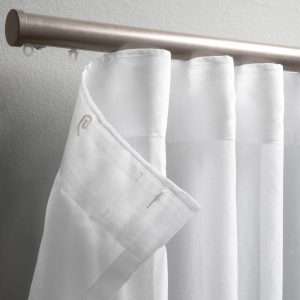
Common wave curtain measuring mistakes to avoid
Measuring only the window glass
The glass measurement doesn’t account for frame coverage or the space needed for the curtains to stack. Plan the track width around the whole window area.
Forgetting the track position
You can’t confirm an accurate drop until you know where the track will sit and how the curtain will hang from it.
Measuring from the wrong point
Measure from the point specified for your chosen track and heading system, not from the ceiling or top of the window.
Assuming all wave systems use the same fullness
Runner spacing and wave ratios vary. Always follow the specifications for the system being supplied.
Ignoring stack-back space
Beautiful folds still need somewhere to go when the curtains are open. Check how much space the folded fabric will occupy.
Overlooking handles and obstructions
A curtain that brushes against a handle or piece of furniture won’t hang or move as neatly as it should. Check the full route of the fabric.
Choosing fabric without considering the track
A delicate sheer and a heavy lined curtain place very different demands on the hardware. Select the fabric and track as a compatible pair.
Taking only one measurement
Measure twice and check the drop in several places. Small differences can become very noticeable across a wide window or a long curtain.
Reusing a standard curtain measurement
A measurement taken for an eyelet or pleated curtain might not be suitable for a wave system. Measure for the actual track and heading you intend to use.
Frequently asked questions
How do you measure for wave curtains?
First establish the position and full usable width of the wave curtain track. Then measure the drop from the correct point on that track to your chosen finishing level. Check the drop at the left, centre and right.
Do you measure the window or the curtain track for wave curtains?
The finished curtain is generally calculated from the track width, not only the window or glass width. If you’re installing a new track, measure the window area first so you can decide how far the track should extend beyond the frame. The final curtain calculation should then be based on the confirmed track and wave system.
How much wider should wave curtains be than the window?
There is no single extension that works for every window. The ideal width depends on the wall space, fabric, track system and the amount of glass you want exposed when the curtains are open.
What track is best for wave curtains?
Choose a purpose-designed wave curtain track that is compatible with the selected heading system and strong enough for the fabric.
Can wave curtains be ceiling mounted?
Yes. Ceiling-mounted tracks are a popular choice for wave curtains and can create a clean ceiling-to-floor effect. The ceiling must be suitable for secure fixing and the track must be positioned far enough from the window and wall for the folds to move freely.
How do you get perfect folds in wave curtains?
Even folds begin with a compatible wave track, the right runner spacing and the right fabric fullness for that particular system. Once the curtain is installed, gently dress it into alternating curves and allow it time to settle.
Get the measurements and track right first
Well-made wave curtains look simple because all the important decisions were made behind the scenes.
If you’re unsure about the track position or whether your preferred fabric will hold a beautiful wave, it’s worth asking for advice before you order.
Finishing Touches can help you explore curtains, compatible track options and tailored window décor solutions designed around your room and the way you use it.