
Plantation shutters vs blinds: which is better for heat and light control?
Plantation shutters give you adjustable louvres in a fitted frame, which suits you if you want to redirect light and add a structured feature to the window. Blinds offer more ways to filter or block light depending on the style you choose, and for heat control the specific product and its fit matter more than the type.
A bright room is lovely until the afternoon sun lands on your sofa or makes your computer screen difficult to read. Choosing the right window covering manages sunlight while keeping the room private and comfortable.
When comparing plantation shutters vs blinds, think about what you need the covering to do. Shutters give you adjustable louvres in a fitted frame. Blinds offer different ways to filter or block light, depending on the style you choose.
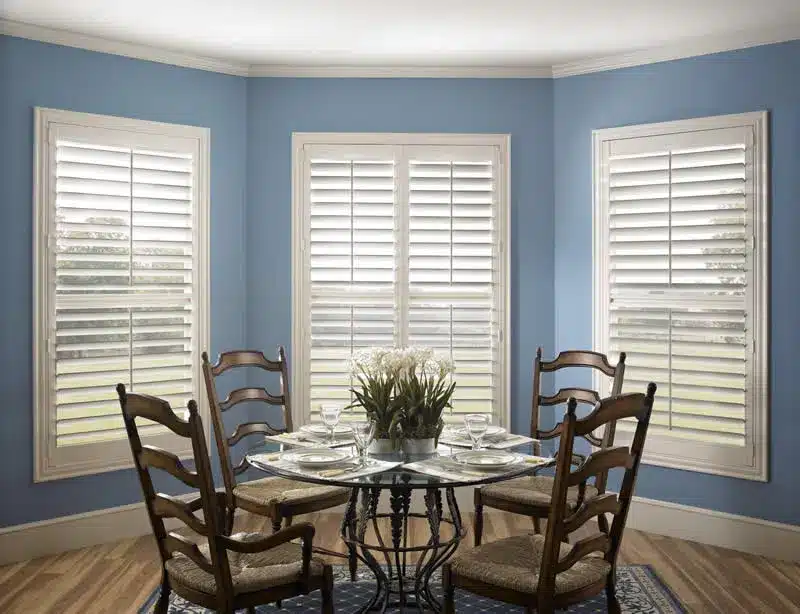
What is the difference between plantation shutters and blinds?
Plantation shutters have rigid panels fitted in a frame, with louvres you tilt to adjust the light and view. Blinds cover a wider range of products, from Venetian slats you tilt or raise to roller fabrics that filter or block light.
Depending on the installation, shutter panels can open on hinges, fold back or slide. They become a prominent part of the window’s appearance.
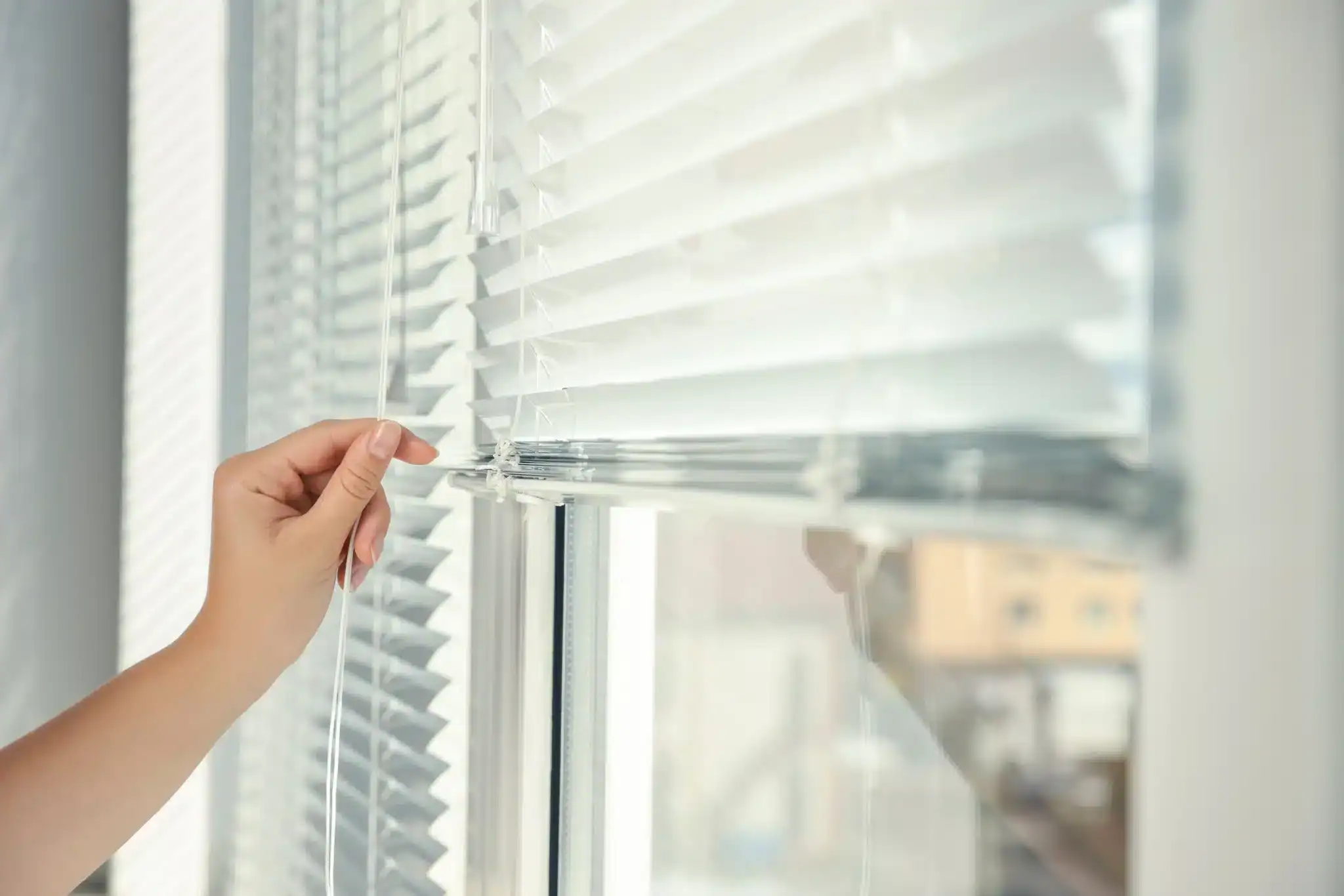
Venetian blinds have adjustable slats that you can tilt or raise. Roller blinds use fabric that rolls up and down, with sheer, light-filtering and blockout options for different purposes. Day-night roller blinds use alternating bands of fabric to vary light and visibility.
Finishing Touches offers made-to-measure shutters and custom-made blinds, including aluminium, wood and Plasswood Venetians, single roller blinds and day-night roller blinds.
| Consideration | Plantation shutters | Blinds |
| Heat management | Closing or adjusting louvres helps manage direct sunshine; thermal results depend on the product and installation | Fabric, slat material, reflectivity and fit affect performance |
| Light control | Louvres let you change the direction and amount of incoming light | Venetian slats tilt; roller fabrics filter or block light according to their specification |
| Privacy | Louvre angles affect sightlines from outside | Depends on slat position or fabric opacity, especially after dark |
| Appearance | A structured, architectural window finish | A choice of fabric finishes, slat styles and colours |
| Maintenance | Frames and individual louvres need cleaning | Cleaning varies between slatted and fabric products |
| Cost | Compare a quote for the complete fitted system | Compare ready-made and custom options, including fittings and installation |
Which is better for heat control?
Both shutters and blinds can manage sunshine, but a darker room isn’t always a cooler room.
Direct sunlight is the beam falling through your window. Glare is brightness that makes it uncomfortable to look at a screen or sit facing the window. Solar heat gain is the heat added to your home by sunlight passing through the glazing. A covering can improve one of these without solving the others.
Plantation shutters
Tilting shutter louvres changes where direct light falls. You can adjust them to reduce a bright patch on the floor or close them during intense sunshine.
Closed louvres create a barrier between the glass and the room, but they don’t stop all heat transfer. Their thermal performance depends on the material and installation. Interior shutters are also positioned behind the glazing, where sunlight has already passed through the glass.
Treat them as one part of your heat-management plan, also using outside shade and ventilation. They aren’t a substitute for properly specified windows or insulation.
Blinds
A sheer roller blind, blockout roller blind and Venetian blind behave differently when it comes to heat control.
Sheer fabrics soften daylight but still admit light. Blockout fabrics prevent light passing through the fabric itself. Venetian slats let you adjust the angle of incoming sunshine. None of those descriptions, on its own, shows precisely how much solar heat the complete installation will reduce.
A light or reflective window-facing surface can reflect more solar radiation than a dark, absorptive one, but the fabric construction and fit also affect the result. Ask for relevant performance information if keeping the room cooler is your biggest priority.
For a window that gets strong afternoon sun, compare how closely the specific blind will cover the opening and whether you’ll close it before the room heats up.
Which offers better light control?
Shutters and Venetian blinds are useful when you want to adjust daylight without uncovering the whole window. Tilting the louvres or slats changes the light’s direction while leaving some daylight and visibility.
Roller blinds offer a different choice: you select the fabric’s light performance, then raise or lower the blind to change how much window is covered.
Think about the result you want:
| Result you want | What to look at |
| Softer daylight | Sheer or light-filtering fabric can diffuse harsh brightness, although it might not remove all screen glare |
| Adjustable light direction | Shutter louvres and Venetian slats let you respond as the sun moves |
| Room darkening | Blockout fabric stops light passing through the material |
| Near-total darkness | Ask about the complete installation, including side gaps, the top of the blind and any other coverings needed |
Shutters can also allow light through small gaps between panels or louvres. If you sleep during the day, ask how the fitting can fix or mitigate any leakage of light through gaps.
How do privacy, appearance and everyday use compare?
Privacy that works after dark
Louvres and slats can be angled to interrupt the view into your room while admitting some daylight. The right angle depends on where someone outside is standing, including whether neighbouring windows overlook yours.
Sheer fabric needs care. A covering that feels private during the day may reveal more when your lights are on at night. For bedrooms or street-facing living rooms, compare privacy window coverings under both conditions.
The finish you want
Shutters frame the window and create a structured feature. They are a favourite in classic homes as well as modern interiors, depending on the proportions and finish.
Blinds give you more variety in how the window looks. A roller blind offers a simple fabric surface, while Venetian slats bring a different texture. Consider how each option will work with your furniture and window frames.
Cleaning and durability
Shutters and Venetian blinds have surfaces that collect dust. Regular light cleaning can make the job easier, but use the method recommended for the material.
Fabric blinds need gentle dusting, vacuuming or spot cleaning where permitted. Not every fabric can be washed and not every slatted product can be wiped with a wet cloth.
Longevity depends on product quality and daily use, as well as exposure to sunlight or moisture. Check the warranty and care instructions for the product you’re considering.
Access and operation
Try to picture using the window every day. Will shutter panels clear your furniture when they open? Can you reach the blind’s controls? Will the covering interfere with a window handle?
For large windows or doorways, ask which opening arrangement and operating system is best for the space. Confirm the options available for your chosen product.
Plantation shutters vs blinds for different rooms
- Bedrooms: begin with privacy and the darkness you need. If early morning light wakes you, pay close attention to edge gaps and fitting details. Blockout roller fabric may be the better option, while shutters offer adjustable daytime light with a structured finish.
- Living rooms: think about how the sunlight moves across the room. Shutters or Venetian blinds let you tilt the light away from seating or a television. A light-filtering roller blind can be best for a room where softer daylight is the main aim.
- Home offices: prioritise sunlight and glare reduction at your desk. An adjustable slatted covering can redirect direct light, while an appropriate roller fabric can soften brightness. Check the choice against your screen position and working hours.
- Kitchens and moisture-prone spaces: choose a material specifically suited to the conditions. Timber, composite materials, metal and fabric need different types of care. Ask what to do about humidity and splashes, as not all shutters or blinds are moisture resistant.
- Sun-facing rooms: assess the window itself. A room with strong afternoon exposure needs a different approach from one that mainly receives gentle morning light. If overheating is your biggest problem, consider the covering as well as the glazing and airflow.

What affects cost, installation and long-term value?
Compare the complete solution instead of the starting prices by factoring in your window dimensions, material choice, fittings and installation.
Made-to-measure shutters need accurate measurements and the right panel arrangement. Custom blinds are also sized to your opening, while ready-made blinds can work where standard dimensions fit the window and mounting position.
A tailored fit can result in better window coverage and overall appearance. Ask how the product will sit in or over the opening.
- ✓ Measuring is included
- ✓ Installation is included
- ✓ Operating hardware is listed
- ✓ Any finishing work is covered
- ✓ The covering won’t make the window awkward to open
Then weigh the cost against the function you’ll use most. A covering that looks right but makes the window awkward to open will offer poor everyday value.
How to choose between plantation shutters and blinds
Use your preferences to narrow the choice:
| Your priority | Lean towards |
| A fitted architectural feature, adjusting light through louvres | Plantation shutters |
| A wider choice of fabric opacity, slat styles or operating arrangements | Blinds |
| Heat management is the deciding factor | Either: compare performance specifications |
| Bedroom darkness or privacy is essential | Either: check the fitting details |
| Any choice | Measure and assess the window for sunlight exposure, opening clearance and access before ordering |
| Option | Pros | Cons |
| Plantation shutters | Adjustable light direction through louvres; a structured, architectural finish; louvres angle for privacy while admitting daylight | Light can pass through gaps between panels or louvres; panels need room to open; frames and individual louvres need cleaning |
| Blinds | Wider choice of fabric opacity, slat styles and operating arrangements; blockout fabric stops light through the material; ready-made options for standard windows | Sheer fabric may reveal more after dark; light can enter around the edges; not every fabric can be washed |
You can choose different coverings for different rooms. A sunny home office and a shaded bedroom don’t need the same solution.
Find the best window décor solution for your home
Bring your window measurements and a clear idea of the problem you want to solve. Is it afternoon heat, screen glare, night-time privacy or early morning light?
Explore Finishing Touches’ custom-made blinds and made-to-measure shutters, then discuss the materials and fitting options for your windows. This gives you a strong basis for choosing window décor you’ll enjoy using every day.
Share your window measurements and what you want to fix, from afternoon heat to early morning light, and compare the options that suit each room.
Frequently asked questions
Are plantation shutters better than blinds for keeping a room cool?
Not always. Shutters can manage direct sunlight when you adjust or close the louvres, while blinds offer different levels of shading depending on their material and design. Your window orientation and the covering’s fit also affect the result. If heat control is your main concern, compare the product specifications you’re considering.
Plantation shutters vs blinds: which offers more flexible light control?
It depends on the result. Shutters and Venetian blinds let you tilt the louvres or slats to change the amount and direction of incoming light. Roller blinds work differently: their fabric filters or blocks light, and you raise or lower them to adjust coverage. Choose based on whether you want to redirect sunlight, soften brightness or darken the room.
Do plantation shutters or blockout blinds provide complete darkness?
Not on their own. Blockout fabric stops light passing through the fabric itself, but light can still enter around the blind’s edges. Shutters can also allow light through gaps between louvres or panels. If you need a very dark bedroom, ask how the installation will address light leakage at the sides and top of the window.
Are plantation shutters or blinds better for privacy?
Both can provide privacy when you choose and use them appropriately. Shutter louvres and Venetian slats can be angled to limit views into your home while allowing some daylight. With roller blinds, privacy depends on the fabric. Sheer fabrics can reveal more after dark when your indoor lights are on, so consider night-time privacy before choosing.
Are shutters or blinds better for reducing glare on a computer screen?
Both can work if you choose the right type. Shutters and Venetian blinds let you angle incoming sunlight away from your desk. The right roller fabric can soften brightness, although sheer fabric may not remove enough glare. Consider your screen position and when you work, then discuss the sunlight reaching that window before choosing.
Can I use different window coverings in different rooms?
Yes. Choose around each room’s needs instead of fitting the same product everywhere. You might want adjustable slats in your home office and blockout fabric in a bedroom. A sunny home office and a shaded bedroom don’t need the same solution, and coordinating colours and finishes can help the different coverings work together visually.
Are all shutters and blinds suitable for kitchens and bathrooms?
No. Moisture resistance depends on the specific material and product, and not all shutters or blinds are moisture resistant. Timber, composite materials, metal and fabric need different types of care. Before ordering, explain whether the covering will face humidity, splashes or cooking messes so you can choose a material suited to the conditions.
Will shutters or blinds interfere with opening my windows?
They can if the fitting hasn’t allowed for handles or panels. Shutter panels also need room to open without hitting furniture, and blind controls need to be within easy reach. Have the window assessed and ask how you’ll open, close and clean it once the covering is installed, especially on large windows or doorways.
Does a darker blind keep a room cooler than a lighter blind?
Not necessarily. Fabric colour alone doesn’t establish heat-control performance. A light or reflective backing can reflect more solar radiation than a dark, absorptive surface, but the fabric construction and fit also affect the result. Compare the specific products’ performance information before deciding, especially for a window that gets strong afternoon sun.
What should I compare when getting quotes for shutters and blinds?
Compare the complete fitted solution, including materials, measurements, operating hardware and installation. Check how each covering will affect your light control and cleaning. Ready-made blinds usually suit standard windows, while custom products offer tailored sizing. Ask what each quote includes so you can judge the cost against the functions you’ll use every day.